
AroMotion
From inspiration to product revelation
From inspiration to product revelation
Independent Concept
Mobile UX/UI
Visual Direction
AI-Assisted Assets
Overview
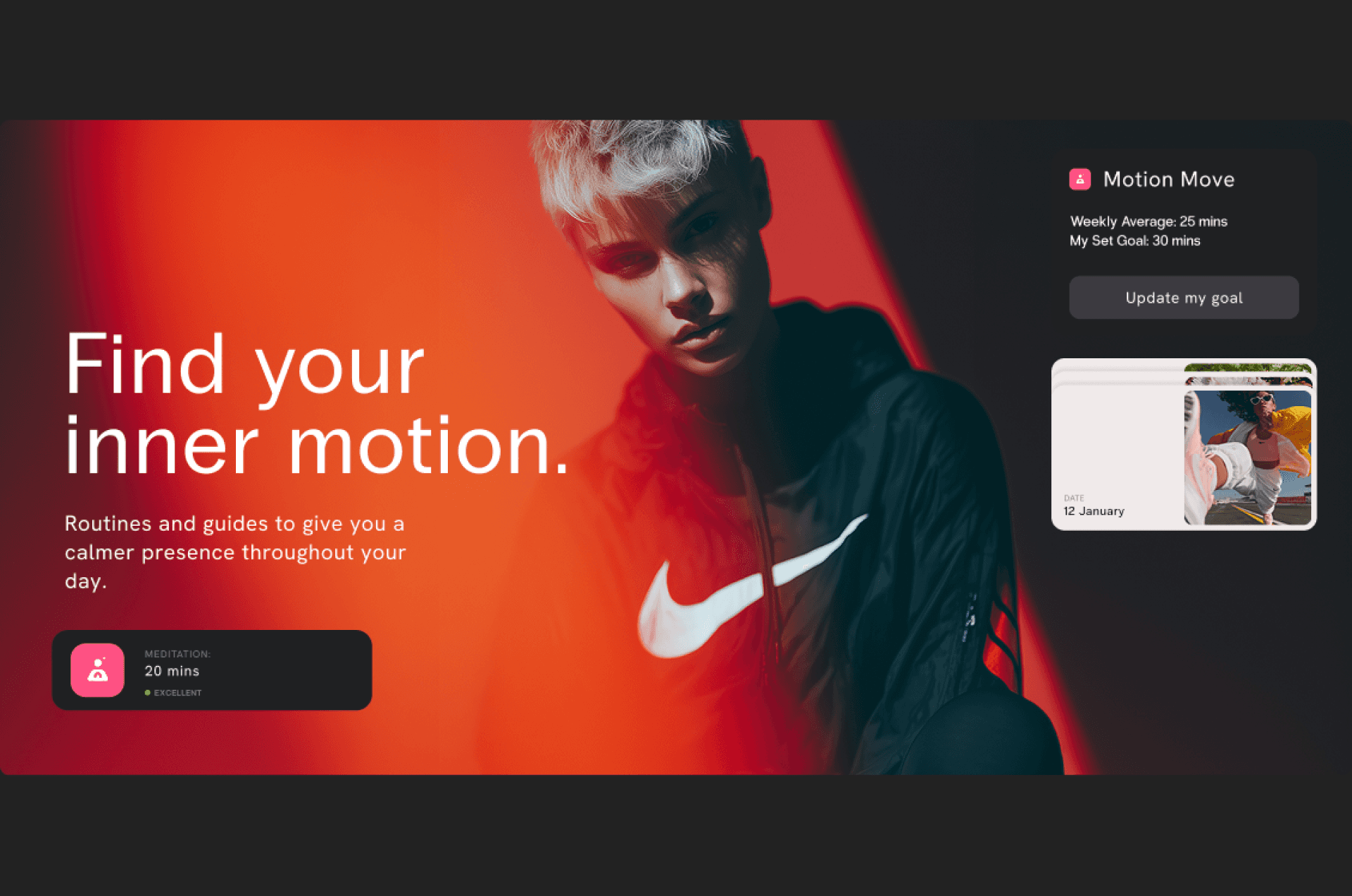
AroMotion explores how a Nike-inspired running experience can bring editorial storytelling and shopping together. Athlete imagery creates an emotional entry point, while clear hierarchy and design system interface patterns guide people toward product exploration.
I developed the creative direction and mobile visual system in Figma, using AI-generated imagery to explore a consistent and powerful campaign across the experience.
A key design decision
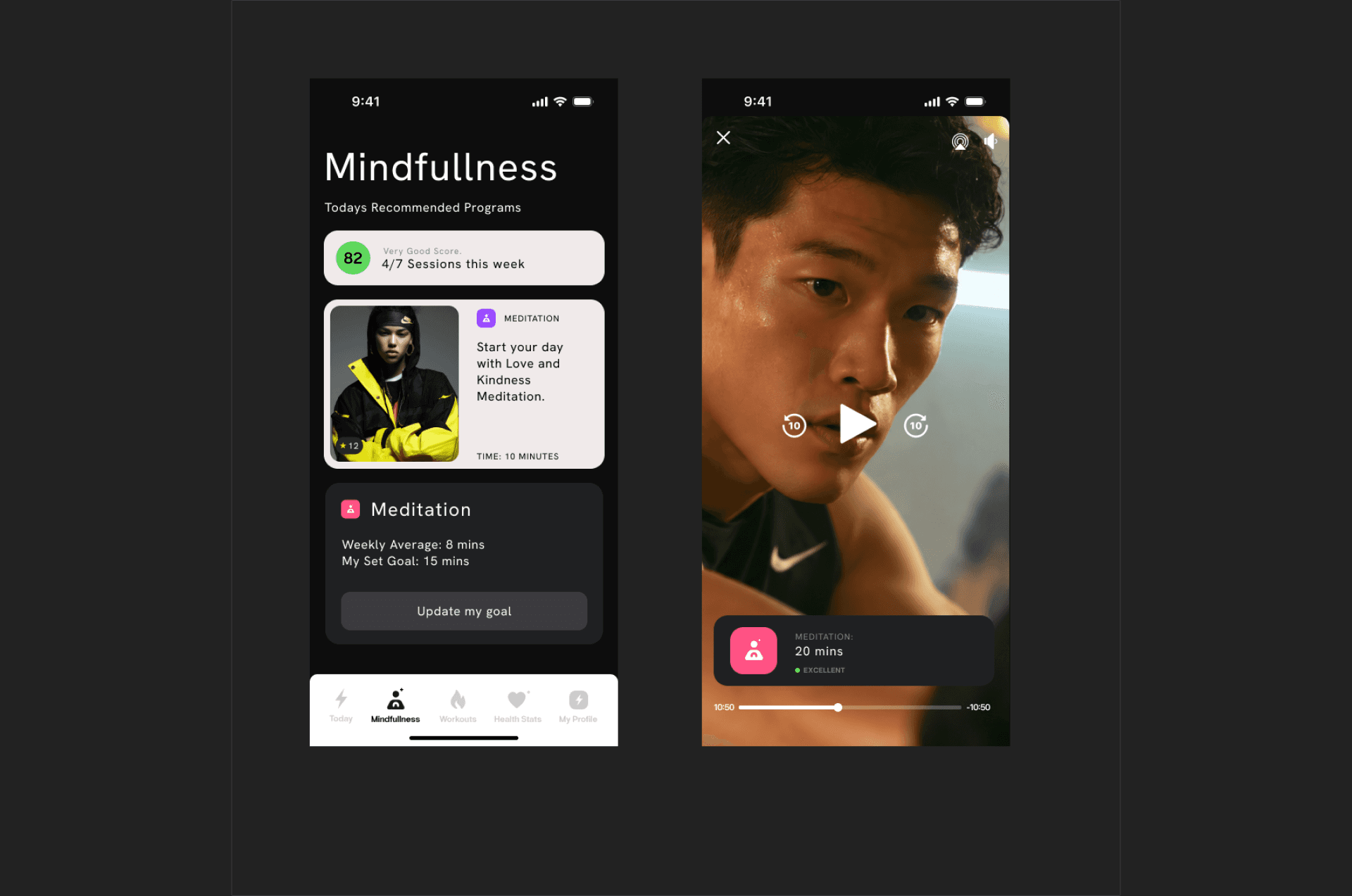
Lead with aspiration, then introduce product detail. The interface gives imagery room to create interest while keeping information and actions easy to find.
The Challenge
Performance-commerce experiences often become either highly transactional or visually expressive, but rarely both.
The challenge was to create an experience that could:
Capture the energy and aspiration of running culture
Make product discovery feel editorial rather than transactional
Maintain clear hierarchy around products and actions
Scale across different categories, campaigns, and content
Preserve a premium Nike-inspired visual language across the entire experience
The opportunity was to connect Nike brand storytelling a shopping utility without sacrificing either.
What I Did
I led the concept from creative direction through visual system and product execution, establishing the brand expression, interface language, and reusable component framework.
Creative Direction:
I defined the bold, performance-driven visual direction using expressive athlete imagery, strong typography, high-contrast compositions, and product-focused storytelling. The goal was to make every screen feel like part of a larger campaign, rather than a collection of UI components.
Commerce Experience:
I structured the experience around a simple journey: Discovery → Explore → Consider → Shop. Campaign imagery and product storytelling create interest first, while clear hierarchy and product information help users move toward purchase without interrupting the experience.
Visual System:
I created a modular design language for the mobile app experience. The system allowed expressive brand moments and commerce-driven screens to coexist within one visual language. The experience was built in Figma and assisted by AI-generated imagery, using reusable components and patterns. This made the concept easier to extend across new products, collections, campaigns, and content while maintaining brand consistency.
Key Decisions:
Lead with aspiration before transaction:
Instead of opening with a dense product grid, the experience uses lifestyle imagery and storytelling to create desire before presenting the commerce opportunity. This mirrors how people often discover products in the real world: See something compelling →understand why it matters → explore the product → buy.
Let imagery carry emotion:
Large-format photography creates the emotional entry point while typography and UI remain intentionally restrained. The interface supports the story instead of competing with it.
Design brand and product together:
The system was developed simultaneously across brand expression and interface behavior. That prevents the common disconnect between a highly expressive campaign and a generic ecommerce experience.

Key Decisions
Lead with aspiration, then introduce product detail. The interface gives imagery room to create interest while keeping information and actions easy to find.
Results
AroMotion became a cohesive concept for connecting performance storytelling with digital commerce. The final system demonstrates how a lifestyle brand, like Nike, can:
Move naturally from inspiration to shopping
Create stronger continuity between campaigns and commerce
Maintain premium visual expression within a functional interface
Reuse components across products and content
Scale a creative idea without diluting the Nike brand
AroMotion reinforces an idea that is increasingly shaping my creative work: Brand, product, and commerce should not feel like separate experiences. People often discover products through connecting imagery, culture, storytelling, and trusted recommendations before they ever encounter a product-detail page.
The creative power is to design that entire journey as one connected system. For me, that means establishing a strong visual idea, translating it into reusable patterns, and giving teams enough structure to scale the experience without losing the emotion that made people interested in the first place.



AroMotion
From inspiration to product revelation
Independent Concept
Mobile UX/UI
Visual Direction
AI-Assisted Assets
Overview
AroMotion explores how a Nike-inspired running experience can bring editorial storytelling and shopping together. Athlete imagery creates an emotional entry point, while clear hierarchy and design system interface patterns guide people toward product exploration.
I developed the creative direction and mobile visual system in Figma, using AI-generated imagery to explore a consistent and powerful campaign across the experience.
A key design decision
Lead with aspiration, then introduce product detail. The interface gives imagery room to create interest while keeping information and actions easy to find.
The Challenge
Performance-commerce experiences often become either highly transactional or visually expressive, but rarely both.
The challenge was to create an experience that could:
Capture the energy and aspiration of running culture
Make product discovery feel editorial rather than transactional
Maintain clear hierarchy around products and actions
Scale across different categories, campaigns, and content
Preserve a premium Nike-inspired visual language across the entire experience
The opportunity was to connect Nike brand storytelling a shopping utility without sacrificing either.
What I Did
I led the concept from creative direction through visual system and product execution, establishing the brand expression, interface language, and reusable component framework.
Creative Direction:
I defined the bold, performance-driven visual direction using expressive athlete imagery, strong typography, high-contrast compositions, and product-focused storytelling. The goal was to make every screen feel like part of a larger campaign, rather than a collection of UI components.
Commerce Experience:
I structured the experience around a simple journey: Discovery → Explore → Consider → Shop. Campaign imagery and product storytelling create interest first, while clear hierarchy and product information help users move toward purchase without interrupting the experience.
Visual System:
I created a modular design language for the mobile app experience. The system allowed expressive brand moments and commerce-driven screens to coexist within one visual language. The experience was built in Figma and assisted by AI-generated imagery, using reusable components and patterns. This made the concept easier to extend across new products, collections, campaigns, and content while maintaining brand consistency.
Key Decisions:
Lead with aspiration before transaction:
Instead of opening with a dense product grid, the experience uses lifestyle imagery and storytelling to create desire before presenting the commerce opportunity. This mirrors how people often discover products in the real world: See something compelling →understand why it matters → explore the product → buy.
Let imagery carry emotion:
Large-format photography creates the emotional entry point while typography and UI remain intentionally restrained. The interface supports the story instead of competing with it.
Design brand and product together:
The system was developed simultaneously across brand expression and interface behavior. That prevents the common disconnect between a highly expressive campaign and a generic ecommerce experience.
Key Decisions
Lead with aspiration, then introduce product detail. The interface gives imagery room to create interest while keeping information and actions easy to find.
Results
AroMotion became a cohesive concept for connecting performance storytelling with digital commerce. The final system demonstrates how a lifestyle brand, like Nike, can:
Move naturally from inspiration to shopping
Create stronger continuity between campaigns and commerce
Maintain premium visual expression within a functional interface
Reuse components across products and content
Scale a creative idea without diluting the Nike brand
AroMotion reinforces an idea that is increasingly shaping my creative work: Brand, product, and commerce should not feel like separate experiences. People often discover products through connecting imagery, culture, storytelling, and trusted recommendations before they ever encounter a product-detail page.
The creative power is to design that entire journey as one connected system. For me, that means establishing a strong visual idea, translating it into reusable patterns, and giving teams enough structure to scale the experience without losing the emotion that made people interested in the first place.
AroMotion
From inspiration to product revelation
Independent Concept
Mobile UX/UI
Visual Direction
AI-Assisted Assets
Overview
AroMotion explores how a Nike-inspired running experience can bring editorial storytelling and shopping together. Athlete imagery creates an emotional entry point, while clear hierarchy and design system interface patterns guide people toward product exploration.
I developed the creative direction and mobile visual system in Figma, using AI-generated imagery to explore a consistent and powerful campaign across the experience.
A key design decision
Lead with aspiration, then introduce product detail. The interface gives imagery room to create interest while keeping information and actions easy to find.
The Challenge
Performance-commerce experiences often become either highly transactional or visually expressive, but rarely both.
The challenge was to create an experience that could:
Capture the energy and aspiration of running culture
Make product discovery feel editorial rather than transactional
Maintain clear hierarchy around products and actions
Scale across different categories, campaigns, and content
Preserve a premium Nike-inspired visual language across the entire experience
The opportunity was to connect Nike brand storytelling a shopping utility without sacrificing either.
What I Did
I led the concept from creative direction through visual system and product execution, establishing the brand expression, interface language, and reusable component framework.
Creative Direction:
I defined the bold, performance-driven visual direction using expressive athlete imagery, strong typography, high-contrast compositions, and product-focused storytelling. The goal was to make every screen feel like part of a larger campaign, rather than a collection of UI components.
Commerce Experience:
I structured the experience around a simple journey: Discovery → Explore → Consider → Shop. Campaign imagery and product storytelling create interest first, while clear hierarchy and product information help users move toward purchase without interrupting the experience.
Visual System:
I created a modular design language for the mobile app experience. The system allowed expressive brand moments and commerce-driven screens to coexist within one visual language. The experience was built in Figma and assisted by AI-generated imagery, using reusable components and patterns. This made the concept easier to extend across new products, collections, campaigns, and content while maintaining brand consistency.
Key Decisions:
Lead with aspiration before transaction:
Instead of opening with a dense product grid, the experience uses lifestyle imagery and storytelling to create desire before presenting the commerce opportunity. This mirrors how people often discover products in the real world: See something compelling →understand why it matters → explore the product → buy.
Let imagery carry emotion:
Large-format photography creates the emotional entry point while typography and UI remain intentionally restrained. The interface supports the story instead of competing with it.
Design brand and product together:
The system was developed simultaneously across brand expression and interface behavior. That prevents the common disconnect between a highly expressive campaign and a generic ecommerce experience.
Key Decisions
Lead with aspiration, then introduce product detail. The interface gives imagery room to create interest while keeping information and actions easy to find.
Results
AroMotion became a cohesive concept for connecting performance storytelling with digital commerce. The final system demonstrates how a lifestyle brand, like Nike, can:
Move naturally from inspiration to shopping
Create stronger continuity between campaigns and commerce
Maintain premium visual expression within a functional interface
Reuse components across products and content
Scale a creative idea without diluting the Nike brand
AroMotion reinforces an idea that is increasingly shaping my creative work: Brand, product, and commerce should not feel like separate experiences. People often discover products through connecting imagery, culture, storytelling, and trusted recommendations before they ever encounter a product-detail page.
The creative power is to design that entire journey as one connected system. For me, that means establishing a strong visual idea, translating it into reusable patterns, and giving teams enough structure to scale the experience without losing the emotion that made people interested in the first place.