
Wiggl Health
Wiggl Health
Designing Habit-Building Wellness Experiences
Designing Habit-Building Wellness Experiences
Mobile App UX/UI
Brand & Product Design
Overview
Designing workplace wellness for movement and cost prevention
Wiggl is a workplace wellness app I designed to help employees move more, reduce pain, and build healthier habits—while giving employers clearer insight into prevention and cost risk. My design goal was to connect both experiences through an end-to-end UX spanning onboarding, assessment, daily exercises, progress tracking, and employer insights.
The Challenge
Modern work keeps people sitting for long periods, whether they’re at a desk, in meetings, or moving between shared workspaces. Over time, lack of movement and poor posture can lead to neck, shoulder, and back pain.
For employees, this affects comfort, focus, and daily energy.
For employers, it creates preventable costs tied to pain, productivity loss, healthcare claims, and ergonomic support.
The challenge was to design one product that served both sides: helping employees build healthier movement habits while helping companies reduce pain-related risk at scale.
What I Did
Employee Experience: Designed a mobile app that helps employees assess discomfort, move more often, and follow personalized stretch routines.
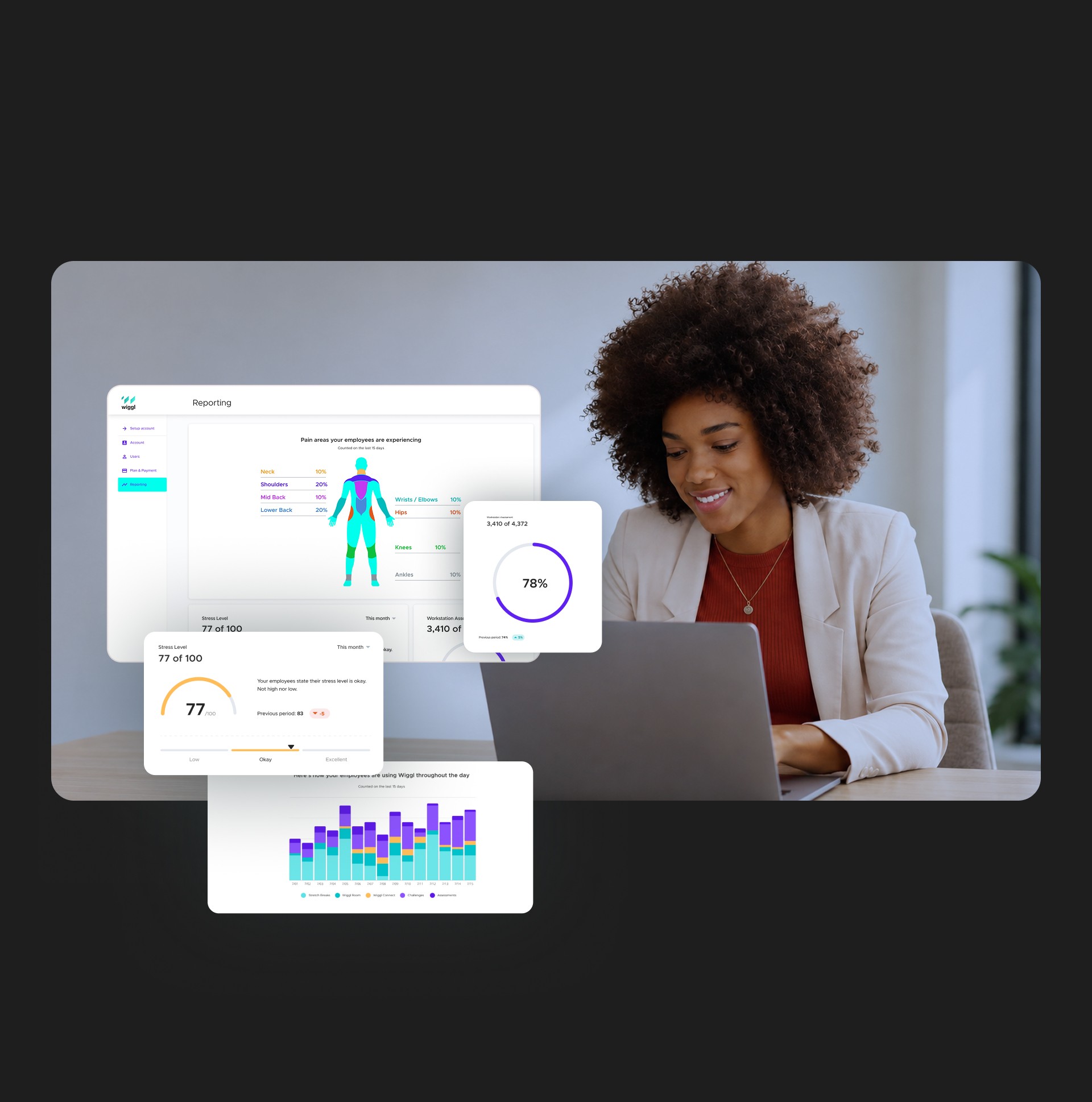
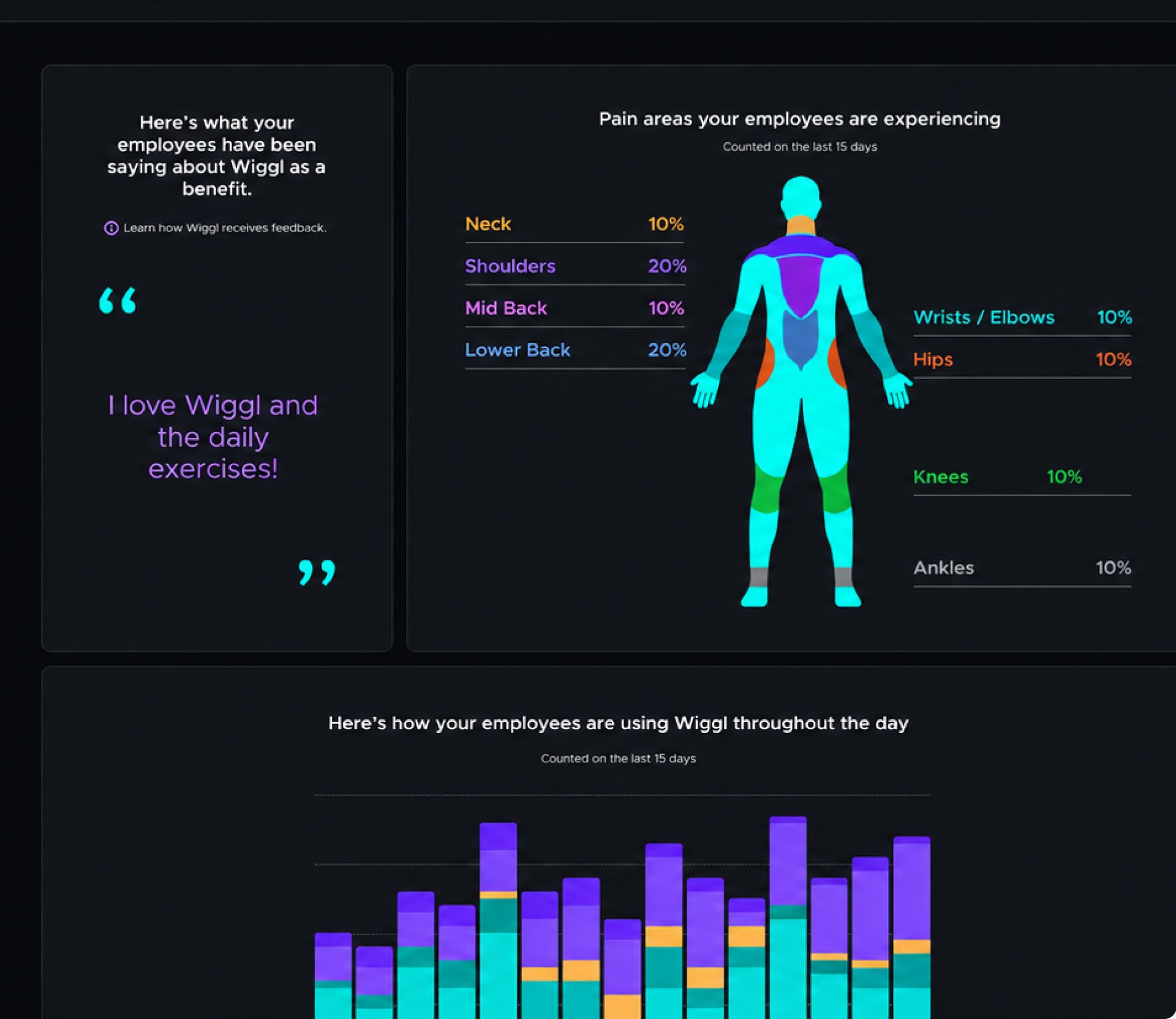
Employer Experience: Designed a dashboard that helps companies identify workforce pain patterns and support prevention early.
Product Strategy: Connected daily movement habits with measurable business value.
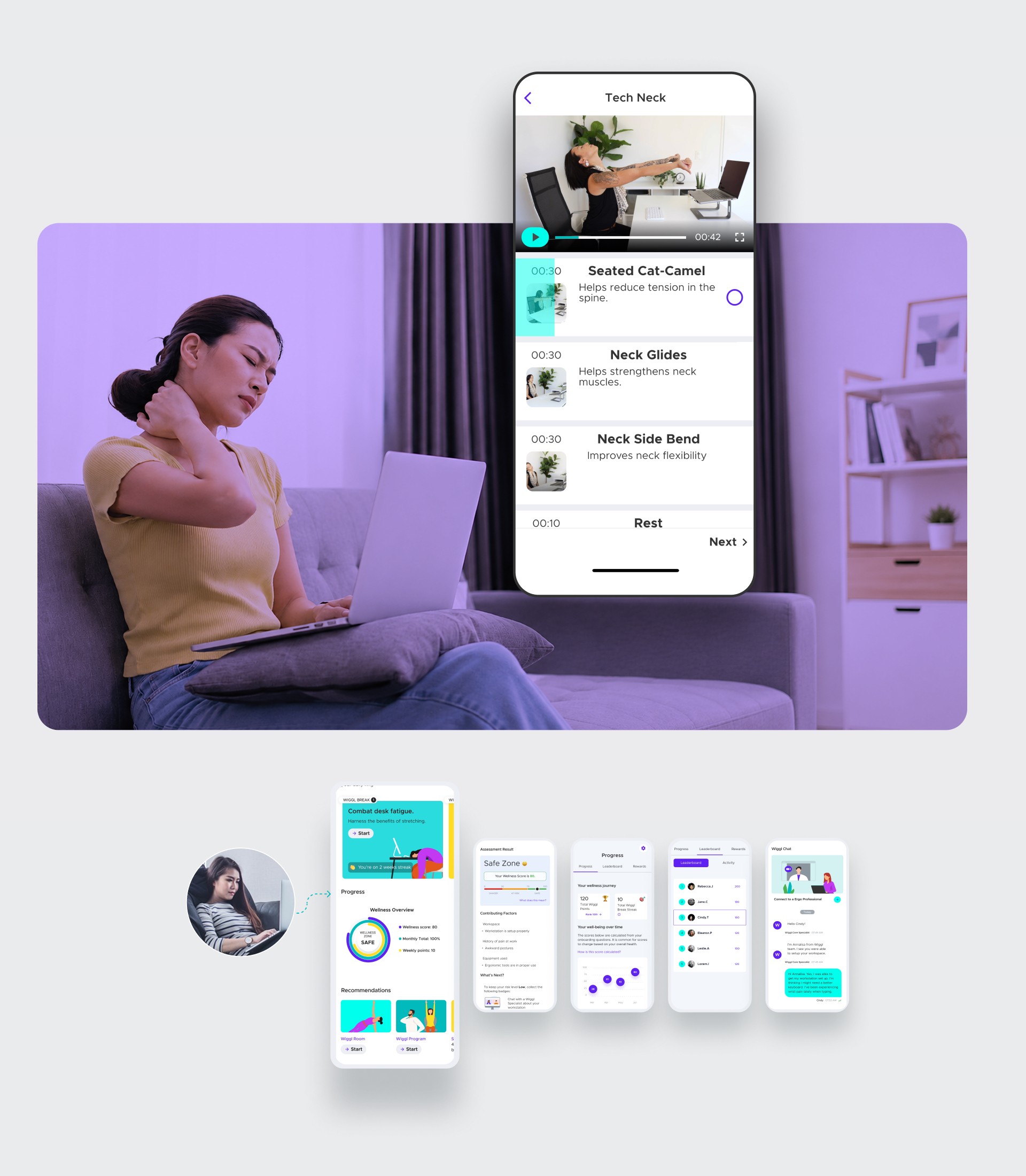
UX/UI Design: Created onboarding, pain assessment, wellness scoring, daily movement prompts, progress tracking, and employer risk visualization.
Design System: Defined reusable UI patterns, visual components, and interaction states to keep the employee app and employer dashboard consistent, scalable, and easy to extend.
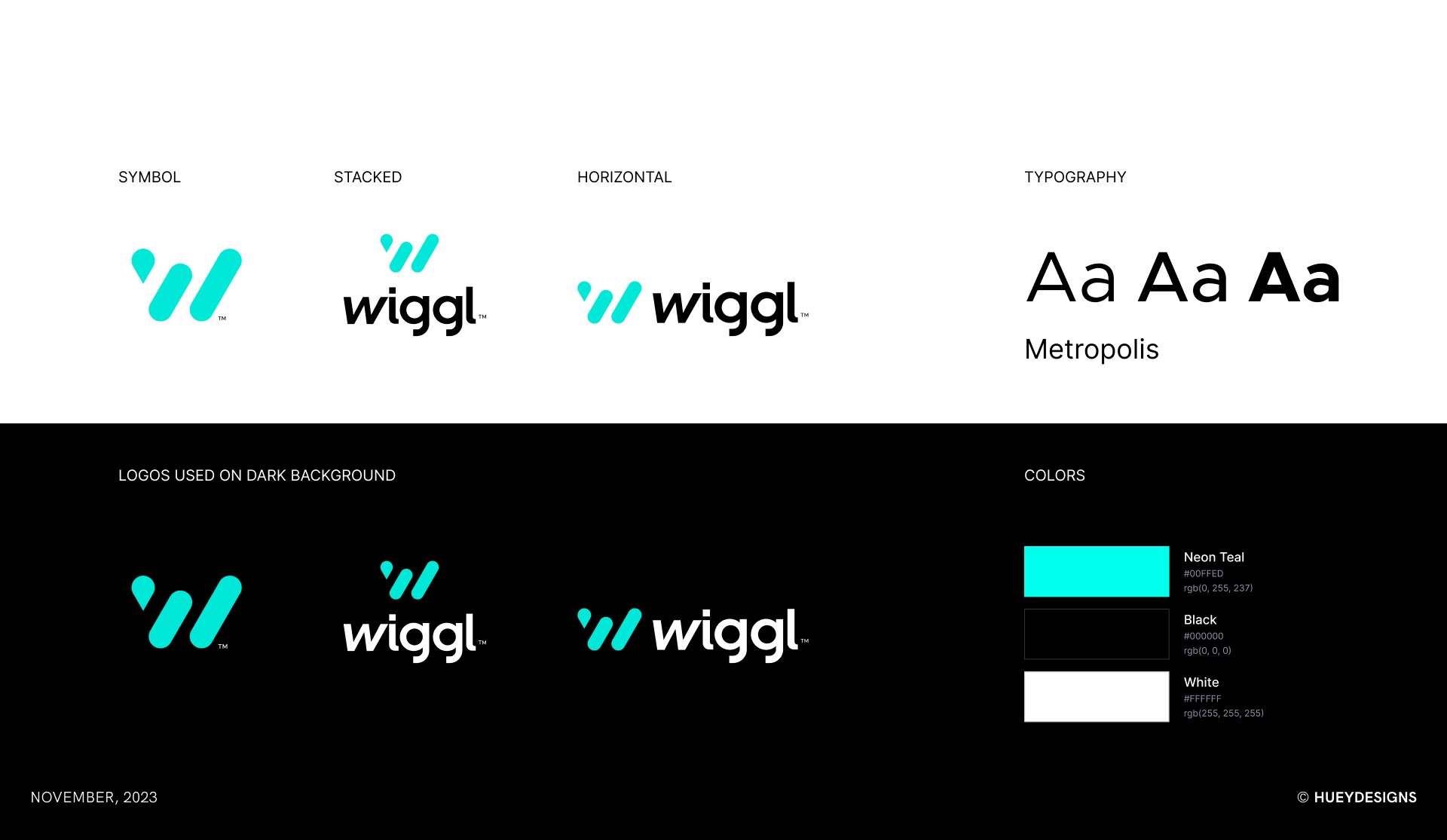
Brand Design: Created the brand direction, visual identity, and product look-and-feel, and the Brand Style Guide to make workplace wellness feel approachable, modern, and motivating.
Key Decisions
Make movement easy.
Short stretches and reminders fit naturally into the workday.
Make pain risk visible.
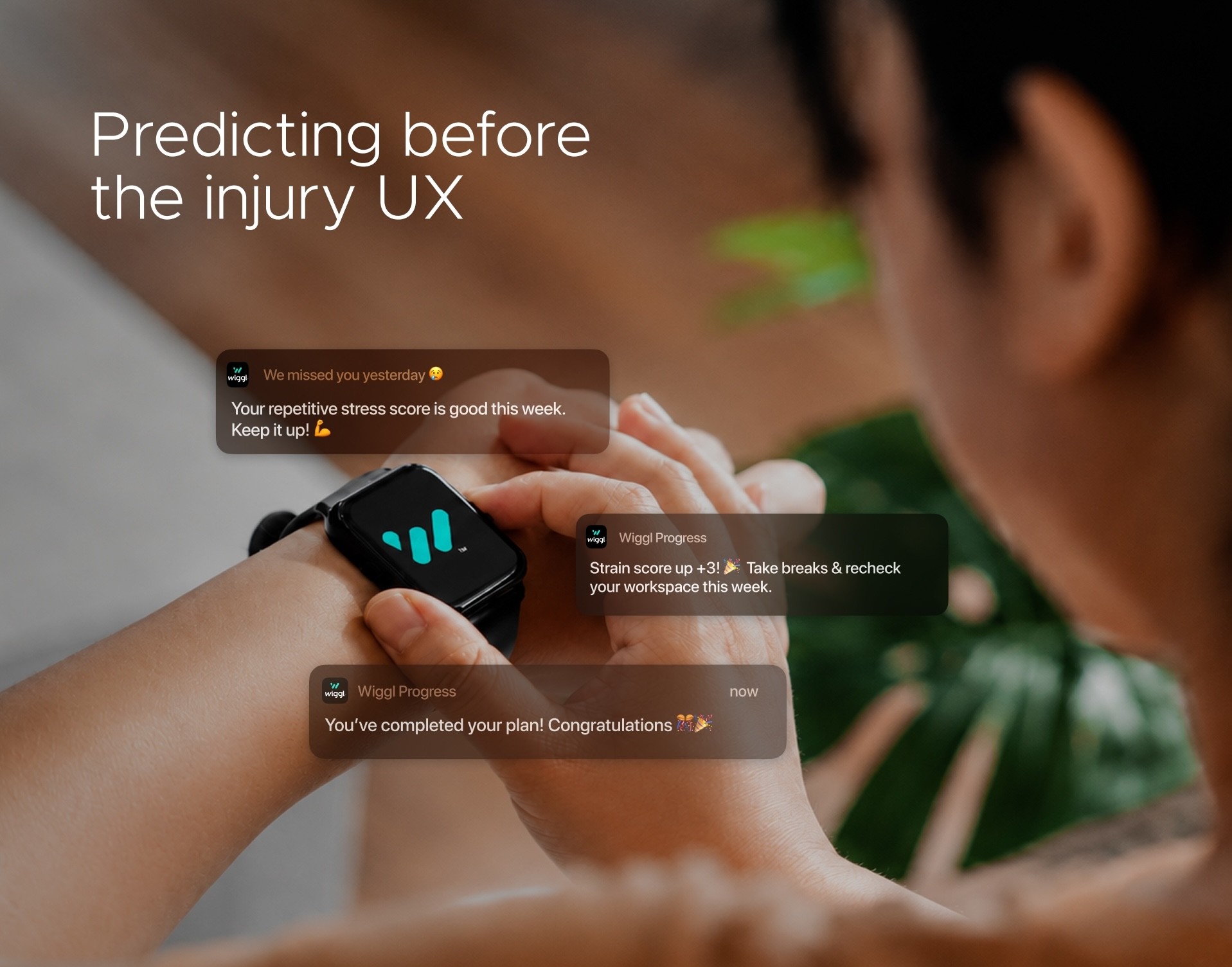
The Wellness Score helped employees understand how posture, movement, and habits affected their physical health.
Make prevention measurable.
The employer dashboard translated individual wellness signals into team-level risk insights.
Design for both audiences.
Employees needed simple motivation. Employers needed visibility and cost prevention.

Core Product Loop
Assess — Employees complete a pain and wellness assessment.
Score — Wiggl generates a personalized wellness score.
Move — Users receive daily stretches and movement prompts.
Track — Progress and achievements encourage consistency.
Inform — Employers see aggregated risk patterns and prevention opportunities.
Results
Paid pilots with Amazon and Meta
Raised $120K
Partnerships with 6 companies
Onboarding 2 midsize organizations
20% increase in user retention
SUS 8/10
Reflection
Wiggl worked because it connected employee well-being with employer savings. For employees, it made movement simple and repeatable. For employers, it turned pain prevention into something visible, measurable, and easier to act on.

Wiggl Health
Designing Habit-Building Wellness Experiences
Mobile App UX/UI
Brand & Product Design
Overview
Designing workplace wellness for movement and cost prevention
Wiggl is a workplace wellness app I designed to help employees move more, reduce pain, and build healthier habits—while giving employers clearer insight into prevention and cost risk. My design goal was to connect both experiences through an end-to-end UX spanning onboarding, assessment, daily exercises, progress tracking, and employer insights.
The Challenge
Modern work keeps people sitting for long periods, whether they’re at a desk, in meetings, or moving between shared workspaces. Over time, lack of movement and poor posture can lead to neck, shoulder, and back pain.
For employees, this affects comfort, focus, and daily energy.
For employers, it creates preventable costs tied to pain, productivity loss, healthcare claims, and ergonomic support.
The challenge was to design one product that served both sides: helping employees build healthier movement habits while helping companies reduce pain-related risk at scale.
What I Did
Employee Experience: Designed a mobile app that helps employees assess discomfort, move more often, and follow personalized stretch routines.
Employer Experience: Designed a dashboard that helps companies identify workforce pain patterns and support prevention early.
Product Strategy: Connected daily movement habits with measurable business value.
UX/UI Design: Created onboarding, pain assessment, wellness scoring, daily movement prompts, progress tracking, and employer risk visualization.
Design System: Defined reusable UI patterns, visual components, and interaction states to keep the employee app and employer dashboard consistent, scalable, and easy to extend.
Brand Design: Created the brand direction, visual identity, and product look-and-feel, and the Brand Style Guide to make workplace wellness feel approachable, modern, and motivating.
Key Decisions
Make movement easy.
Short stretches and reminders fit naturally into the workday.
Make pain risk visible.
The Wellness Score helped employees understand how posture, movement, and habits affected their physical health.
Make prevention measurable.
The employer dashboard translated individual wellness signals into team-level risk insights.
Design for both audiences.
Employees needed simple motivation. Employers needed visibility and cost prevention.
Core Product Loop
Assess — Employees complete a pain and wellness assessment.
Score — Wiggl generates a personalized wellness score.
Move — Users receive daily stretches and movement prompts.
Track — Progress and achievements encourage consistency.
Inform — Employers see aggregated risk patterns and prevention opportunities.
Results
Paid pilots with Amazon and Meta
Raised $120K
Partnerships with 6 companies
Onboarding 2 midsize organizations
20% increase in user retention
SUS 8/10
Reflection
Wiggl worked because it connected employee well-being with employer savings. For employees, it made movement simple and repeatable. For employers, it turned pain prevention into something visible, measurable, and easier to act on.
Wiggl Health
Designing Habit-Building Wellness Experiences
Mobile App UX/UI
Brand & Product Design
Overview
Designing workplace wellness for movement and cost prevention
Wiggl is a workplace wellness app I designed to help employees move more, reduce pain, and build healthier habits—while giving employers clearer insight into prevention and cost risk. My design goal was to connect both experiences through an end-to-end UX spanning onboarding, assessment, daily exercises, progress tracking, and employer insights.
The Challenge
Modern work keeps people sitting for long periods, whether they’re at a desk, in meetings, or moving between shared workspaces. Over time, lack of movement and poor posture can lead to neck, shoulder, and back pain.
For employees, this affects comfort, focus, and daily energy.
For employers, it creates preventable costs tied to pain, productivity loss, healthcare claims, and ergonomic support.
The challenge was to design one product that served both sides: helping employees build healthier movement habits while helping companies reduce pain-related risk at scale.
What I Did
Employee Experience: Designed a mobile app that helps employees assess discomfort, move more often, and follow personalized stretch routines.
Employer Experience: Designed a dashboard that helps companies identify workforce pain patterns and support prevention early.
Product Strategy: Connected daily movement habits with measurable business value.
UX/UI Design: Created onboarding, pain assessment, wellness scoring, daily movement prompts, progress tracking, and employer risk visualization.
Design System: Defined reusable UI patterns, visual components, and interaction states to keep the employee app and employer dashboard consistent, scalable, and easy to extend.
Brand Design: Created the brand direction, visual identity, and product look-and-feel, and the Brand Style Guide to make workplace wellness feel approachable, modern, and motivating.
Key Decisions
Make movement easy.
Short stretches and reminders fit naturally into the workday.
Make pain risk visible.
The Wellness Score helped employees understand how posture, movement, and habits affected their physical health.
Make prevention measurable.
The employer dashboard translated individual wellness signals into team-level risk insights.
Design for both audiences.
Employees needed simple motivation. Employers needed visibility and cost prevention.
Core Product Loop
Assess — Employees complete a pain and wellness assessment.
Score — Wiggl generates a personalized wellness score.
Move — Users receive daily stretches and movement prompts.
Track — Progress and achievements encourage consistency.
Inform — Employers see aggregated risk patterns and prevention opportunities.
Results
Paid pilots with Amazon and Meta
Raised $120K
Partnerships with 6 companies
Onboarding 2 midsize organizations
20% increase in user retention
SUS 8/10
Reflection
Wiggl worked because it connected employee well-being with employer savings. For employees, it made movement simple and repeatable. For employers, it turned pain prevention into something visible, measurable, and easier to act on.