
Syniverse
Syniverse
SaaS Messaging Platform UX
SaaS Messaging Platform UX
SaaS Messaging Platform
Product UX/UI
Overview
Unifying a fragmented developer experience into a clearer digital messaging platform
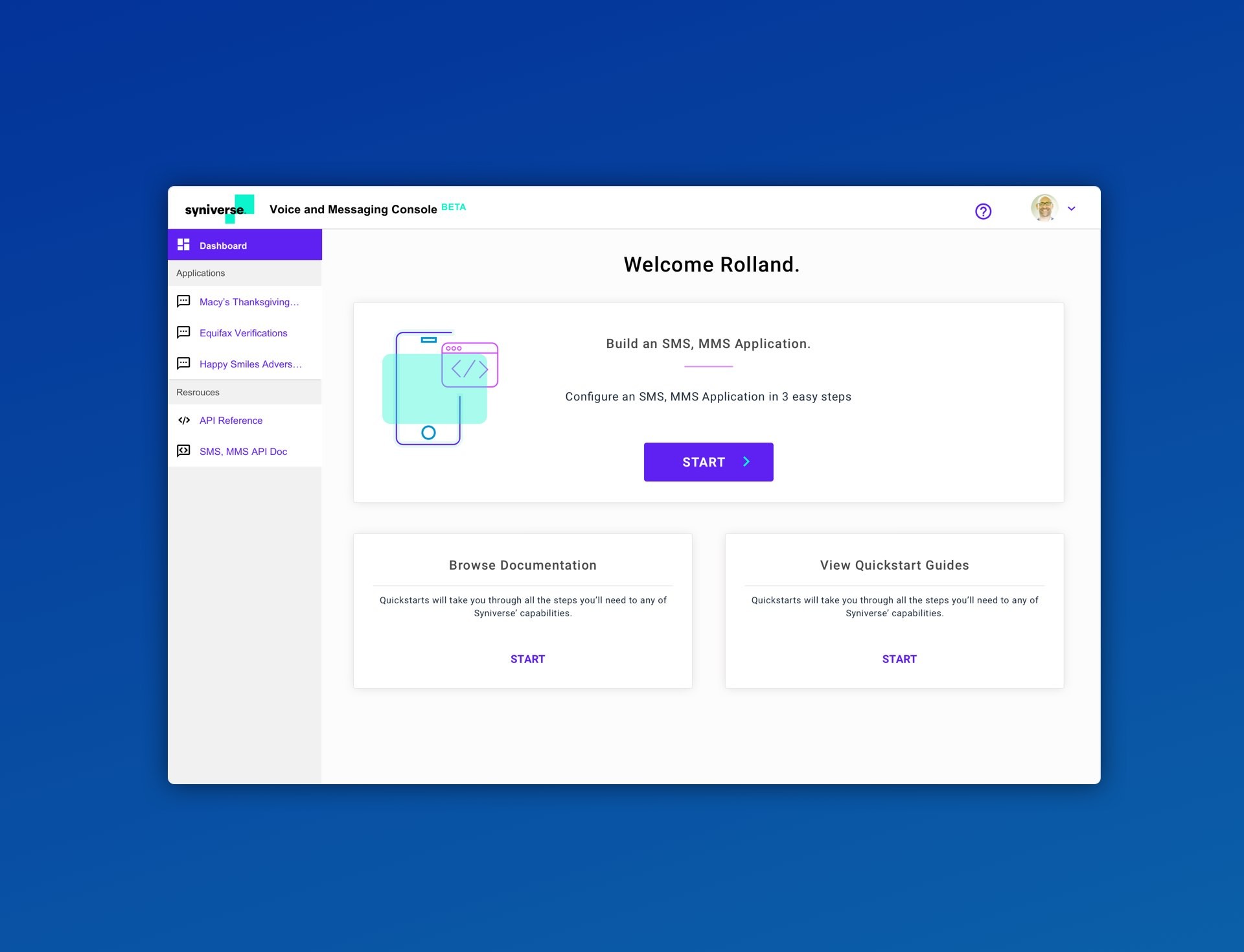
Syniverse Messaging Console was a developer platform for building, configuring, and managing SMS/MMS messaging applications. I led the product design strategy to bring disconnected portals, documentation, onboarding, and account management into one unified experience that helped developers move from learning to building with less friction.

The Challenge
Syniverse had strong messaging capabilities, but the developer experience was fragmented across separate portals, documentation, onboarding, and account tools.
The challenge was to turn that siloed experience into a guided self-service platform that helped developers understand the product, build their first SMS/MMS app, and manage it with less support.
What I Did
Experience Audit: Audited the existing Messaging Console and related portals to identify UX gaps, duplicated flows, inconsistent patterns, and broken handoffs across the developer journey.
Information Architecture: Restructured the platform around four core developer needs: learn the offering, build the first app, use documentation while developing, and manage the account and application settings.
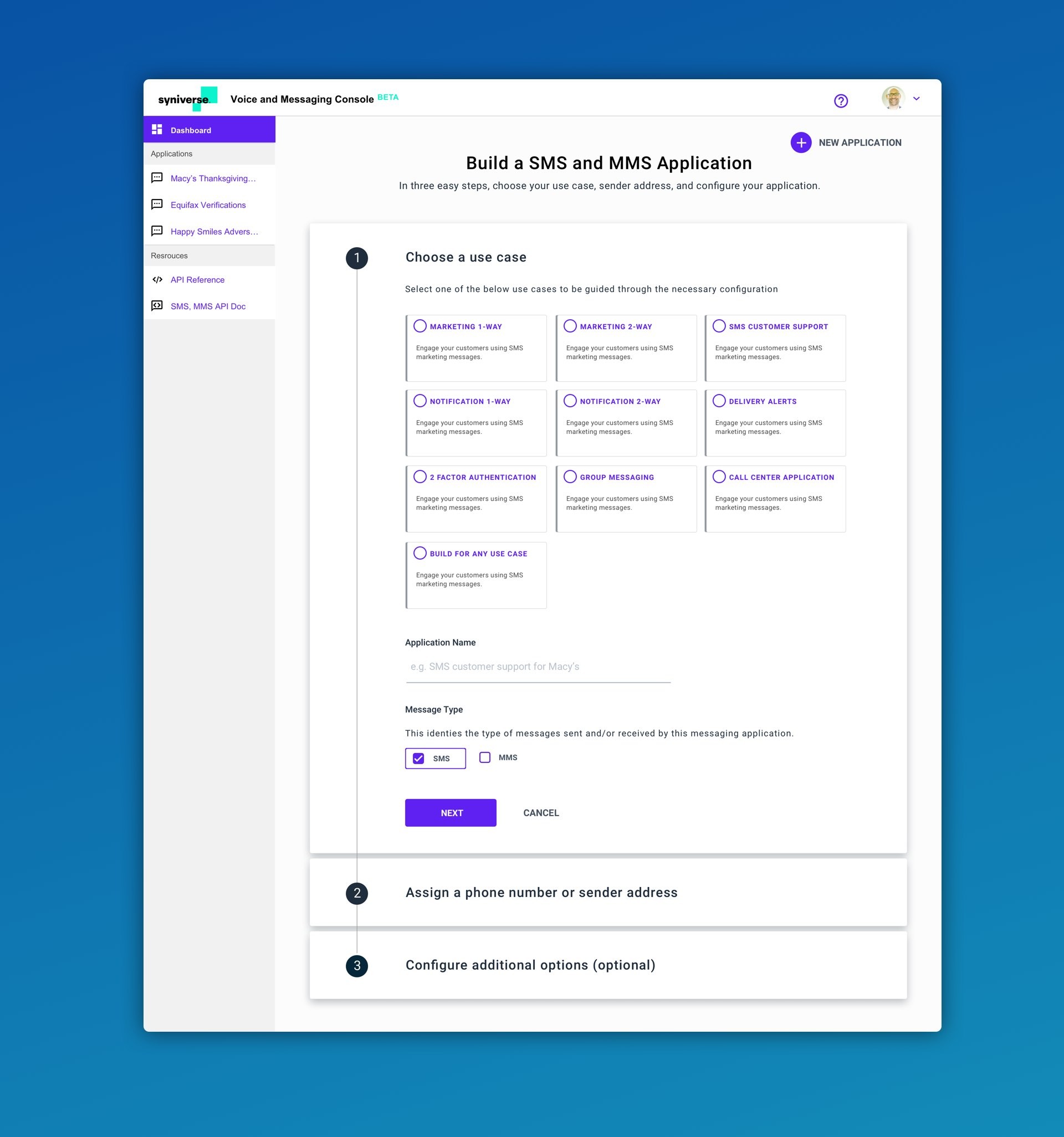
Developer Onboarding: Designed a clearer self-service onboarding flow that helped developers create an SMS/MMS messaging application with more guidance, better sequencing, and fewer dead ends.
Documentation Experience: Connected product flows with documentation so developers could use docs as a practical build guide instead of a separate reference library.
Design System: Created reusable components, visual patterns, interaction standards, and design guidelines to improve consistency across current and future Syniverse platform experiences.
Design Culture Enablement: Facilitated workshops with executives, engineers, developers, and UX architects to build alignment around design thinking, user-centered decision-making, and the role of a shared design system.
Key Decisions
Design around the developer journey. Instead of organizing the experience around internal systems and portals, the platform was reframed around what developers needed to accomplish from first visit to active management.
Unify the silos. The new experience brought learning, onboarding, documentation, building, and management into a more cohesive platform so users did not feel like they were jumping between disconnected products.
Make documentation actionable. Documentation needed to help developers make progress during setup. The UX connected docs to real tasks, reducing the gap between reading instructions and building an application.
Create consistency through systems. The design system was not treated as a static PDF. It became a living foundation for components, patterns, guidelines, and future product consistency.
Build internal design momentum. Workshops helped stakeholders understand how design thinking could improve product quality, engineering alignment, and customer outcomes across the organization.

Core Product Loop
Learn — Developers understand Syniverse messaging capabilities, value, and use cases.
Onboard — Users create an account and enter a guided setup experience.
Build — Developers configure their first SMS/MMS messaging application.
Reference — Documentation supports the build process with clearer guidance.
Manage — Users monitor, update, and maintain their messaging app and account settings inside the console.
Results
Created a unified product direction for Syniverse’s Messaging Console experience.
Reduced fragmentation across multiple apps, portals, and documentation surfaces.
Established a clearer self-service path for developers building their first messaging application.
Improved platform consistency through a reusable component library, design samples, and living design guidelines.
Helped cross-functional teams align around a more user-centered product vision.
Introduced design thinking practices through workshops with executives, engineers, developers, and UX architects.
This project reinforced that developer platforms need more than technical capability—they need guidance, continuity, and confidence. Developers should not have to decode an organization’s internal structure just to build their first app. By reframing the platform around the journey from learning to managing, the Syniverse experience became easier to understand, easier to extend, and better positioned to support future digital messaging products.

Syniverse
SaaS Messaging Platform UX
SaaS Messaging Platform
Product UX/UI
Overview
Unifying a fragmented developer experience into a clearer digital messaging platform
Syniverse Messaging Console was a developer platform for building, configuring, and managing SMS/MMS messaging applications. I led the product design strategy to bring disconnected portals, documentation, onboarding, and account management into one unified experience that helped developers move from learning to building with less friction.
The Challenge
Syniverse had strong messaging capabilities, but the developer experience was fragmented across separate portals, documentation, onboarding, and account tools.
The challenge was to turn that siloed experience into a guided self-service platform that helped developers understand the product, build their first SMS/MMS app, and manage it with less support.
What I Did
Experience Audit: Audited the existing Messaging Console and related portals to identify UX gaps, duplicated flows, inconsistent patterns, and broken handoffs across the developer journey.
Information Architecture: Restructured the platform around four core developer needs: learn the offering, build the first app, use documentation while developing, and manage the account and application settings.
Developer Onboarding: Designed a clearer self-service onboarding flow that helped developers create an SMS/MMS messaging application with more guidance, better sequencing, and fewer dead ends.
Documentation Experience: Connected product flows with documentation so developers could use docs as a practical build guide instead of a separate reference library.
Design System: Created reusable components, visual patterns, interaction standards, and design guidelines to improve consistency across current and future Syniverse platform experiences.
Design Culture Enablement: Facilitated workshops with executives, engineers, developers, and UX architects to build alignment around design thinking, user-centered decision-making, and the role of a shared design system.
Key Decisions
Design around the developer journey. Instead of organizing the experience around internal systems and portals, the platform was reframed around what developers needed to accomplish from first visit to active management.
Unify the silos. The new experience brought learning, onboarding, documentation, building, and management into a more cohesive platform so users did not feel like they were jumping between disconnected products.
Make documentation actionable. Documentation needed to help developers make progress during setup. The UX connected docs to real tasks, reducing the gap between reading instructions and building an application.
Create consistency through systems. The design system was not treated as a static PDF. It became a living foundation for components, patterns, guidelines, and future product consistency.
Build internal design momentum. Workshops helped stakeholders understand how design thinking could improve product quality, engineering alignment, and customer outcomes across the organization.
Core Product Loop
Learn — Developers understand Syniverse messaging capabilities, value, and use cases.
Onboard — Users create an account and enter a guided setup experience.
Build — Developers configure their first SMS/MMS messaging application.
Reference — Documentation supports the build process with clearer guidance.
Manage — Users monitor, update, and maintain their messaging app and account settings inside the console.
Results
Created a unified product direction for Syniverse’s Messaging Console experience.
Reduced fragmentation across multiple apps, portals, and documentation surfaces.
Established a clearer self-service path for developers building their first messaging application.
Improved platform consistency through a reusable component library, design samples, and living design guidelines.
Helped cross-functional teams align around a more user-centered product vision.
Introduced design thinking practices through workshops with executives, engineers, developers, and UX architects.
This project reinforced that developer platforms need more than technical capability—they need guidance, continuity, and confidence. Developers should not have to decode an organization’s internal structure just to build their first app. By reframing the platform around the journey from learning to managing, the Syniverse experience became easier to understand, easier to extend, and better positioned to support future digital messaging products.
Syniverse
SaaS Messaging Platform UX
SaaS Messaging Platform
Product UX/UI
Overview
Unifying a fragmented developer experience into a clearer digital messaging platform
Syniverse Messaging Console was a developer platform for building, configuring, and managing SMS/MMS messaging applications. I led the product design strategy to bring disconnected portals, documentation, onboarding, and account management into one unified experience that helped developers move from learning to building with less friction.
The Challenge
Syniverse had strong messaging capabilities, but the developer experience was fragmented across separate portals, documentation, onboarding, and account tools.
The challenge was to turn that siloed experience into a guided self-service platform that helped developers understand the product, build their first SMS/MMS app, and manage it with less support.
What I Did
Experience Audit: Audited the existing Messaging Console and related portals to identify UX gaps, duplicated flows, inconsistent patterns, and broken handoffs across the developer journey.
Information Architecture: Restructured the platform around four core developer needs: learn the offering, build the first app, use documentation while developing, and manage the account and application settings.
Developer Onboarding: Designed a clearer self-service onboarding flow that helped developers create an SMS/MMS messaging application with more guidance, better sequencing, and fewer dead ends.
Documentation Experience: Connected product flows with documentation so developers could use docs as a practical build guide instead of a separate reference library.
Design System: Created reusable components, visual patterns, interaction standards, and design guidelines to improve consistency across current and future Syniverse platform experiences.
Design Culture Enablement: Facilitated workshops with executives, engineers, developers, and UX architects to build alignment around design thinking, user-centered decision-making, and the role of a shared design system.
Key Decisions
Design around the developer journey. Instead of organizing the experience around internal systems and portals, the platform was reframed around what developers needed to accomplish from first visit to active management.
Unify the silos. The new experience brought learning, onboarding, documentation, building, and management into a more cohesive platform so users did not feel like they were jumping between disconnected products.
Make documentation actionable. Documentation needed to help developers make progress during setup. The UX connected docs to real tasks, reducing the gap between reading instructions and building an application.
Create consistency through systems. The design system was not treated as a static PDF. It became a living foundation for components, patterns, guidelines, and future product consistency.
Build internal design momentum. Workshops helped stakeholders understand how design thinking could improve product quality, engineering alignment, and customer outcomes across the organization.
Core Product Loop
Learn — Developers understand Syniverse messaging capabilities, value, and use cases.
Onboard — Users create an account and enter a guided setup experience.
Build — Developers configure their first SMS/MMS messaging application.
Reference — Documentation supports the build process with clearer guidance.
Manage — Users monitor, update, and maintain their messaging app and account settings inside the console.
Results
Created a unified product direction for Syniverse’s Messaging Console experience.
Reduced fragmentation across multiple apps, portals, and documentation surfaces.
Established a clearer self-service path for developers building their first messaging application.
Improved platform consistency through a reusable component library, design samples, and living design guidelines.
Helped cross-functional teams align around a more user-centered product vision.
Introduced design thinking practices through workshops with executives, engineers, developers, and UX architects.
This project reinforced that developer platforms need more than technical capability—they need guidance, continuity, and confidence. Developers should not have to decode an organization’s internal structure just to build their first app. By reframing the platform around the journey from learning to managing, the Syniverse experience became easier to understand, easier to extend, and better positioned to support future digital messaging products.